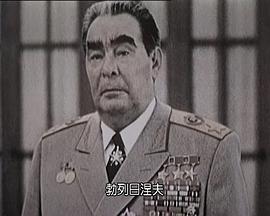
“It is a film from an extended series. It is hard to say who is the main character of “The Soviet Elegy.” There are more than a hundred faces of our compatriots. But, of course, it is not by chance that it is the destiny of a famous political figure, Boris Nikolayevitch Yeltsin, that bears a special accent in the film. Though he got to power following quite typical ways, his uncommon character puts him out of the ordinary, and in the author’s opinion it may be determined by his uncommon human nature. Our hero exists within the tragic pattern of the soviet socialist life. He is a character of a drama, of which he is one of the authors. “The Soviet Elegy” can hardly be called a documentary film in the proper sense. Of course, the author guarantees the accuracy of chronology, but he insists on an artistic mode of thinking, not on a political or historical investigation.”
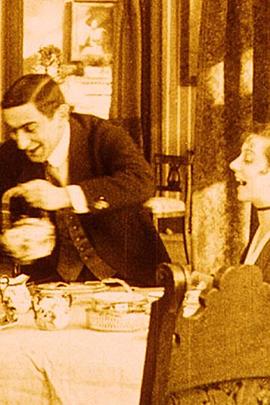
丈夫被与他和妻子住在一起的唠叨丈母娘纠缠。一天晚上,他醉醺醺地回家后,被丈母娘踢了出去。他伪装成一个仆人,在自己家里找到了一份工作。
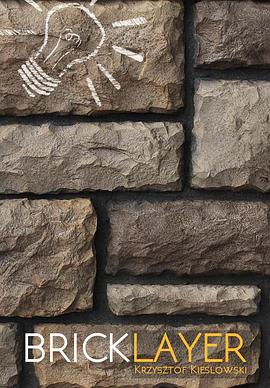
A bit of color for once, all the better to see the red flags with, not to mention the obvious aerial file footage of Warsaw. The story concerns Jozef Malesa, the mason or bricklayer of the title. He was once the darling of the party, the son of two old party activists, a worker of heroic reputation, his own commitment to The Movement unquestioned. He was chosen to be destined for great things, specially educated and pushed forward to positions of responsibility in the Party. Eventually he decides, because of the ethical pressures which he feels from the obstructionism of the bureaucracy from above, he asks to return to be a simple bricklayer. He is disturbed with the way the Party deals with people, especially their lack of direct contact. He thinks workers know better than the leadership many times but that's not the way power flows. He is uncomfortable with the compromises to his idealism. He remains committed to social justice and joins his friends for the May Day rally where his comfort and confidence in his place in society cause him to defer to no man, certainly no rat faced men in overcoats with red armbands. His great pleasure in life moreover is laying brick. He finds the work satisfying and fulfilling which is why he was such an obviously superior worker in the first place.
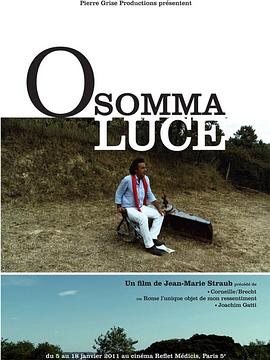
The lines start with “O Somma Luce” which is the title of the film and also the 67th line of the 33rd canto in “Paradiso” of Dante’s “Divine Comedy” to the end of “Paradiso”. The film is completed with music and lines instead of emotions and narrations. This is a recent attempt to combine film with literature. The film begins with a black screen and the music of Edgard Varese. The BGM is “Deserts” that was recorded in 1954. After some moments of darkness, the music ends and a middle-aged man sits on a hill, reciting something. He is Giorgio Passerone, an Italian literature professor, and he is reading out of the last part of ‘Paradiso’ of Dante’s Divine Comedy. Jean-Marie Straub expressed how he thinks of Dante through a subtle accent and dialect. The director who had encoded many great artists and musicians including Bach, complete the combination of Dante and Varese, which could seem strange. (Lim Kyung Yong)
《望夫石》(La Pierre de l'attente,1991),陳英雄一部21分鐘的短片,曾經獲得1992年里爾國際電影節(Lille International Short and Documentary Film Festival)評審團大獎